
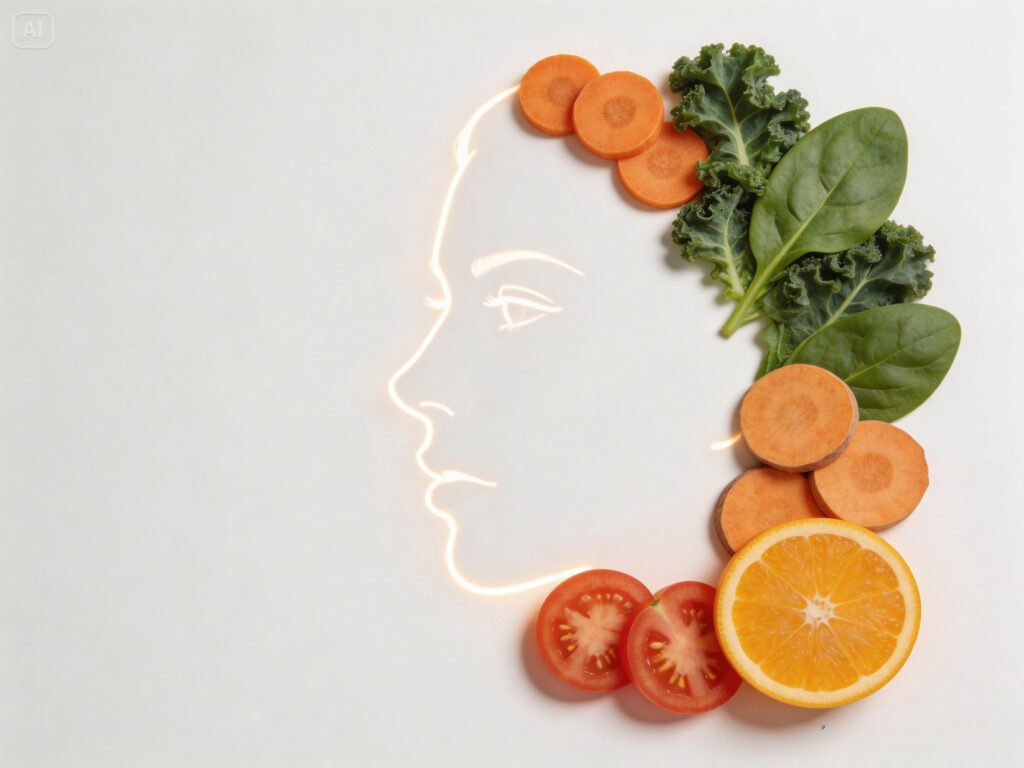
The concept of protecting skin health through diet is not new, but recent research has
highlighted a compelling and often overlooked truth: the nutrients we consume directly influence
the structure, resilience, and appearance of our skin. In effect, we can achieve a form of “edible
skin care”—an internal strategy for anti-aging and sun protection that complements topical
approaches like sunscreen.
A Historical Perspective on Skin and Nutrition
Historically, skin care has been synonymous with creams, ointments, and lotions applied
topically. Ancient cultures, however, often recognized the role of diet in skin health. Traditional
Chinese medicine and Ayurvedic practices emphasized foods for their cooling, warming, and
protective properties, and European herbalists prescribed nutrient-rich foods to preserve
youthfulness.
Modern science is only beginning to quantify and understand these age-old observations. With
the skin’s rapid regenerative capacity—its entire outer layer replacing itself roughly every 28
days—the nutrients we provide on a daily basis shape skin condition month-to-month, not just
over years. This highlights a crucial insight: dietary choices today influence the skin we see
tomorrow.
Understanding Skin Frailty and Aging
Skin aging is not merely cosmetic. Skin frailty, characterized by thinning, reduced elasticity,
and collagen loss, increases vulnerability to bruises, tears, and itching. A cross-sectional study
examining dietary intake and skin frailty found that higher consumption of fruits and
vegetables correlates with better skin integrity, reinforcing the connection between diet and
structural skin health.
Collagen: The Skin’s Structural Protein
Collagen is the primary protein that maintains skin’s firmness and elasticity. With age, collagen
production decreases, leading to wrinkles and sagging. Emerging research suggests that
certain dietary patterns—particularly those rich in leafy greens and carotenoids—can stimulate
collagen synthesis and reduce the enzymatic breakdown of this vital protein.
Green Leafy Vegetables: Nature’s Internal Sunscreen
A study conducted in Korea explored the effects of chlorophyll intake on skin health. Women
randomized to consume chlorophyll—equivalent to a few tablespoons of cooked spinach
daily—demonstrated significant increases in collagen production and skin elasticity after
three months. Additionally, markers of DNA damage from ultraviolet (UV) exposure were
reduced.
Although this study lacked a control arm, it aligns with dermatological commentary advocating
leafy greens for photoprotection. The term “inside-out sunscreen” is increasingly used to
describe the protective effect of antioxidant-rich foods, which bolster the skin’s defenses from
within.
Carotenoids and Photoprotection
Carotenoids, pigments found in colorful vegetables and fruits, provide additional anti-aging
benefits. Randomized, placebo-controlled trials show that:
● Curly kale extracts over ten months improved collagen status in the skin.
● Tomato paste consumption (around three tablespoons daily for three months) reduced
UV-induced DNA damage and decreased activity of enzymes that degrade collagen.
● Beta-carotene from sweet potatoes can boost collagen production fourfold and reduce
UV-induced DNA damage by roughly 30 percent over a few months.
These studies illustrate that whole foods often outperform isolated supplements. For
example, lycopene supplements alone did not achieve the photoprotective effects observed with
whole tomatoes, suggesting that synergy among antioxidants is crucial.
The Science of Nutrient Synergy
Antioxidants often work in tandem. Vitamin C, for example, regenerates oxidized vitamin E,
enhancing overall photoprotection. Meta-analyses show that combined antioxidant intake can
increase the UV dose required to induce skin redness by more than 75 percent. Other
carotenoids, such as lutein and zeaxanthin from dark green leafy vegetables, improve skin
hydration, elasticity, and resistance to UV-induced damage within just two weeks of intake.
Whole Foods vs. Supplements
While supplements can provide convenience, they frequently lack the complex array of
antioxidants found in whole foods. Studies indicate that:
● Apple extracts and combinations of rosemary and grapefruit extracts can protect
skin from UV exposure.
● Conversely, blackcurrant juice and pomegranate extracts did not yield significant
photoprotective effects in the timeframes studied.
● Coenzyme Q10 supplements reduced fine lines (such as crow’s feet) but did not confer
UV protection.
This suggests that whole-food dietary patterns, rather than isolated compounds, are more
likely to deliver consistent skin benefits.
Dietary Photoprotection vs. Topical Sunscreen
Topical sunscreens remain the gold standard for immediate UV protection, offering SPF levels
ranging from 10 to 50+. However, dietary photoprotection provides complementary advantages:
● It works continuously across the entire skin surface, including areas often missed by
sunscreen application.
● It does not wash off with sweat or water.
● It improves baseline skin resilience, reducing UV-induced DNA damage over time.
Yet, it is important to recognize the limitations: dietary photoprotection builds slowly, often taking
weeks to months to reach meaningful effects, and typically offers only modest SPF
equivalent (~SPF 4). Sunscreen and nutrition are most effective when used together.
Practical Dietary Recommendations for Skin Health
Based on current evidence, the following guidelines can optimize skin protection and reduce
premature aging:
- Consume leafy greens daily: Spinach, kale, and collard greens provide lutein,
zeaxanthin, and chlorophyll. - Include carotenoid-rich vegetables: Sweet potatoes, carrots, pumpkin, and tomatoes
support collagen and UV resistance. - Eat a variety of colorful fruits: Berries, grapes, and citrus fruits supply synergistic
antioxidants. - Prioritize whole foods over supplements: The combination of multiple phytochemicals
is often more effective than isolated compounds. - Maintain consistency: Photoprotective effects require sustained dietary intake, often
over 8–12 weeks.
Conclusion: A Holistic Approach to Anti-Aging Skin Care
The emerging field of edible skin care underscores the power of nutrition as a complement to
traditional skin care. By providing our skin with the essential nutrients it requires for
regeneration and protection, we can enhance collagen production, reduce oxidative damage,
and improve elasticity and hydration. While food cannot replace sunscreen, it creates a built-in
layer of protection, making skin more resilient against daily environmental stressors.
Incorporating these principles into daily life is both practical and evidence-based: the path to
youthful, resilient skin may very well begin on th plate.


